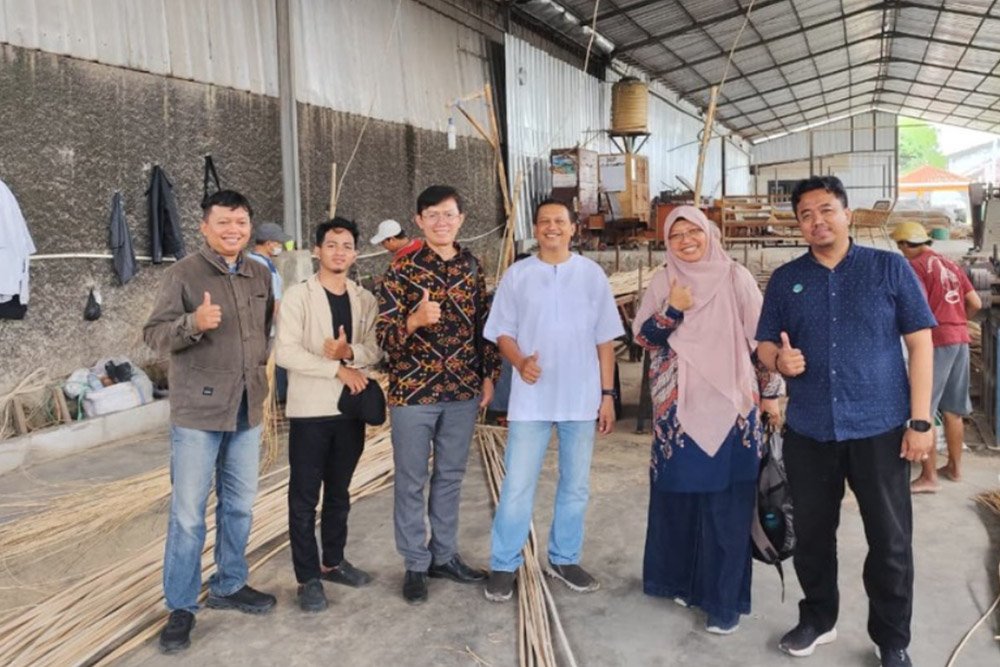

Greater Cirebon is recognized as one of Indonesia’s leading rattan manufacturing hubs, producing high-quality rattan goods for both domestic and international markets. The industry has flourished through generations of expertise, meticulous production standards, and the ability to adapt to modern design trends and global market demands.
What Makes Cirebon Rattan Unique?
Generational Craftsmanship with Global Reputation
Rattan artisans in Greater Cirebon possess technical mastery passed down through generations. Their work is known for precise detailing, clean connections, and exceptionally strong structural integrity—qualities that set them apart from other production regions.
Superior and Consistent Finishing
Cirebon is known for its refined finishing techniques, resulting in smooth, even, and long-lasting surface quality. Its signature coloring and coating processes give rattan a premium appearance and lasting durability—even under long-term use.
Scalable Production for Export Markets
Unlike many other regions, Greater Cirebon has a well-established ecosystem of artisans, workshops, factories, and exporters. This integrated structure enables large-scale production capacity without compromising craftsmanship or quality.
Versatile Design: From Traditional to Modern Minimalist
Cirebon’s designers and craftsmen seamlessly blend traditional elements with contemporary global design trends. Whether classic, tropical, Scandinavian, or Japandi—Cirebon can adapt to the needs of international brands.
High-Quality and Stable Raw Materials
Cirebon manufacturers typically use carefully selected rattan sourced from Kalimantan, Sulawesi, and Sumatra. With proper treatment and drying processes, the result is rattan furniture that is more resistant to humidity and less prone to cracking.
A Fully Connected Manufacturing Ecosystem
From raw material processing, frame building, weaving, and finishing, to export-ready packaging—every stage of production exists within one interconnected industrial hub. This makes Cirebon more efficient, reliable, and competitive compared to regions that still depend on fragmented supply chains.